
Texas offers hunters the opportunity to experience some of the best deer seasons in the country. From white tailed deer to mule deer, every hunt follows rules that protect wildlife and keep the land safe. These Texas deer hunting regulations guide hunters on when, where, and how to hunt legally across the state.
Keep reading to learn more about Texas deer season dates, bag limits, and other important rules every licensed hunter should know before heading into the field. These rules will help you do your own part for South Texas wildlife conservation.
Key Takeaways
Texas deer hunting regulations protect wildlife, promote safety, and preserve hunting traditions.
Deer season in Texas typically runs from early November through mid-January, so now’s the time to review the latest hunting rules before heading out.
Only licensed hunters can hunt in Texas, and they must know the rules for public and private land.
Following these laws helps control diseases like chronic wasting disease (CWD) and supports healthy deer populations across Texas.
Texas Deer Season Dates
Here are the dates you need to know to go deer hunting in Texas. These dates cover white tailed deer and mule deer seasons. Remember: always check your county’s rules, as they may change.
White Tailed Deer Seasons
- Archery-Only Season – This season runs from September 27 to October 31, 2025, in most counties. You use a bow and arrow only.
- Youth-Only Deer Seasons (For Licensed Hunters 16 or Younger) – Early seasons start from October 24 to 26, 2025, and in the late seasons from January 5 to 18, 2026.
- General Season – The north zone season starts from November 1, 2025, to January 4, 2026. The south zone season begins from November 1, 2025, to January 18, 2026.
- Muzzleloader Season – This season runs from January 5 to January 18, 2026, in many counties. This is for certain guns (muzzleloaders).
- Special Late Season – The north zone season starts from January 5 to 18, 2026, while the south zone season begins from January 19 to February 1, 2026.
Mule Deer Hunting Seasons
- Archery-Only Season – For the Panhandle, this season runs from September 27 to November 21, 2025. The Trans-Pecos event runs from September 27 to November 27, 2025.
- General Season – For the Panhandle, this season runs from November 22 to December 7, 2025. For the Trans-Pecos (and some counties like Brewster, Pecos, and Terrell), the season runs from November 28 to December 14, 2025.
Types of Deer You Can Hunt in Texas
In Texas, several types of deer are regularly hunted. Each kind has its own rules, including legal buck deer, antler restrictions, and bag limits. Besides mule deer and white tailed deer, Texas may have a few other deer or hybrids, though they’re rare. Hunting rules mainly focus on these two main species. You can learn more about the primary deer species below:
White Tailed Deer
The white tailed deer is the most common deer in Texas, found mostly in the east and southern parts of the state. Hunters can take both bucks and does, but must follow rules for legal buck deer and antlerless deer. In many counties, antler restriction regulations decide which bucks can be hunted. A legal buck deer must have an inside spread past the ear tips or at least one branched antler. These rules help young bucks grow and keep deer populations balanced.
Most hunters can take up to five white tailed deer per year, with no more than three bucks. Also, every hunter must have a valid hunting license tag and follow all state laws, whether on public or private land.
Mule Deer
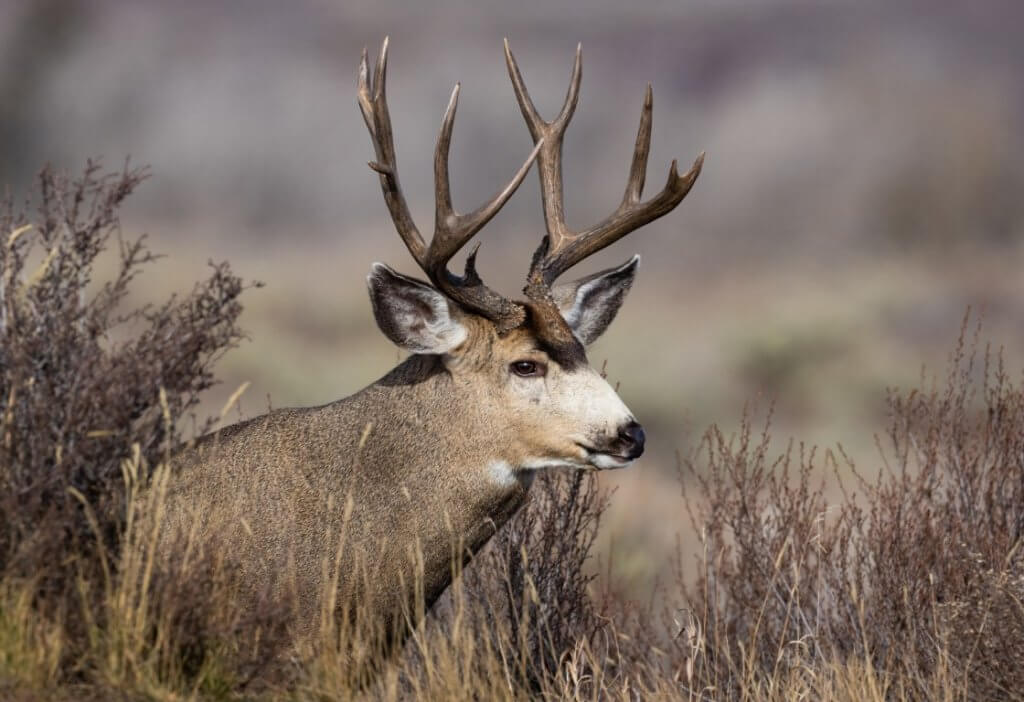
Mule deer live mostly in western Texas, including the Panhandle, High Plains, and Trans-Pecos regions. They’re easy to spot by their big, mule-like ears and forked antlers, which split instead of growing from one beam.
Texas has clear regulations for hunting mule deer. The yearly bag limit is two deer, and only one can be a buck. Also, a legal buck deer must have an outside spread of more than one bank (20 inches) between the antler tips. This helps protect young bucks and keep herds healthy.
Some counties also have antler restriction regulations to limit the hunting of unbranched antlered deer. After every hunt, hunters must tag each deer using a valid hunting license tag.
Deer Hunting Regulations in Texas
Texas has rules to keep deer hunting fair, safe, and healthy for deer populations. While hunting, hunters must follow limits on how many deer they can take, what weapons they can use, and how to report a harvest. Below are deer hunting regulations in Texas that hunters need to abide by:
Annual Bag Limits
Texas bag limits help protect deer and ensure a fair hunting experience. Most hunters may take up to five deer per season, with no more than three bucks. However, make sure to check local county rules before hunting, and keep in mind that some species are more restricted.
Weapons Restrictions
Only approved weapons are allowed. Depending on the season, hunters may use rifles, shotguns, or bows that meet Texas Parks and Wildlife Department (TPWD) safety standards.
Mandatory Harvest Reporting
After a hunt, licensed hunters must report their harvest to help TPWD track deer populations and chronic wasting disease (CWD). Record each kill on your license tag and report it through TPWD.
Antler Restriction Regulation
Texas uses antler restrictions to protect young bucks. A legal buck deer must have an antler spread past the ears or be unbranched. This regulation allows more deer to mature before harvest.
Other Regulations
Hunters need a valid license and must tag every deer they harvest. Also, hunting on private land requires the landowner’s permission, and breaking these rules can lead to fines or loss of license.
Regulations on Chronic Wasting Disease Areas
Chronic wasting disease (CWD) affects white tailed and mule deer, causing them to experience weight loss and strange behavior. The TPWD enforces rules to protect healthy herds. If you hunt in a CWD zone, you have to follow these rules:
- Check if your hunting spot is inside a chronic wasting disease zone before you start hunting.
- Every deer you harvest must be tested for CWD. This helps TPWD track symptomatic CWD-susceptible species.
- You must report your harvest and use your hunting license tag correctly.
Do not move certain deer parts, like the head or spine, out of the area until testing is done. - Follow all TPWD testing instructions and bag limits to stay within the law.
Hunting on State and Federal Land vs. Hunting on Private Land
In Texas, hunters can choose to hunt on state, federal, or private land. However, the rules vary for each type of land. Understanding these differences helps licensed hunters stay safe and comply with the law.
Hunting on State and Federal Land:
- Only licensed hunters with Hunter Education can hunt on public land.
- Hunters must follow all Texas deer hunting regulations, including bag limits and weapons restrictions.
- Some areas may have special hunting dates or limits to protect deer populations.
- Always check posted signs and rules before entering public hunting grounds.
Hunting on Private Land:
- Hunters will need the landowner’s permission or may need to pay for access before hunting.
- Hunters still have to follow all state hunting regulations.
- Hunters must carry a hunting license, and hunter education may be required.
Support Conservation by Following Texas Deer Hunting Regulations
Texas deer hunting regulations protect wildlife and preserve outdoor traditions. These rules keep deer populations healthy and ensure fair, safe hunting. Licensed hunters also play a key role by following the laws and respecting South Texas wildlife conservation.
Whether on public or private land, obeying Texas hunting regulations for deer helps protect white tailed deer, mule deer, and other Texas wildlife for future generations.